
How 3D Print Entrepreneurs Handle Material Cost Changes in Pricing
A practical guide for 3D print sellers on building a pricing buffer, buying in bulk, and tracking material cost changes without constant repricing.

By Tyler Reece · Published May 3, 2026 · Updated May 3, 2026 · 6 min read
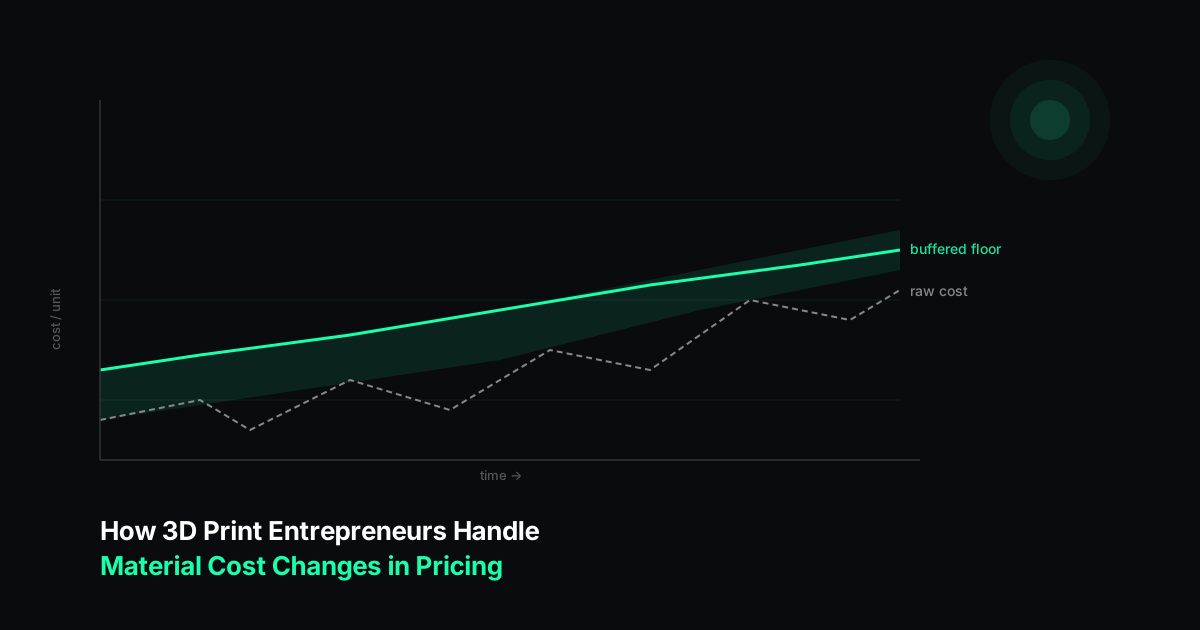
The most reliable way to handle material cost changes in your 3D print pricing is to build a buffer into your base cost from day one — and only revisit listings when your tracked cost floor moves enough to eat through that buffer. Sellers who reprice reactively (adjusting every listing the moment a filament spool gets more expensive) create two problems: operational overhead and customer friction. A 10–15% materials buffer baked into your cost floor gives you room to absorb short-term swings without surprising buyers or churning through your entire product catalog.
Why Material Prices Move
Three forces drive most of the volatility 3D print sellers experience:
Tariffs. US import duties on Chinese-manufactured goods — the source of most commodity PLA and PETG — have shifted multiple times since 2018 under Section 301 trade actions. Each change affects the landed cost of imported spools.
Supply chain delays. Polymer feedstocks move through a long chain before they reach a spool. Disruptions — resin shortages, port congestion, shipping rate spikes — flow through to filament prices with a lag of weeks or months.
Your own purchasing behavior. A seller buying one spool at a time pays retail. A seller buying 20 spools at once often pays 15–30% less per kilogram. Your effective cost is partly a function of your own buying decisions.
Tariff-driven changes tend to be structural and stay in place after announcement. Supply chain disruptions are usually temporary. The one variable you fully control is your purchasing cadence.
The Problem With Pricing Off Today's Spool Cost
Most sellers set initial prices by checking what a spool costs at that moment. That works fine — until the price moves.
When your material cost was $25/kg and you priced to a 5% margin, a $4 increase wipes out that margin entirely. No buffer, no warning, no time to respond. The listing still shows the old price while your actual cost has already changed.
The fix is not faster repricing. It is building a buffer so the first price swing doesn't immediately break your math.
Building a Materials Buffer Into Your Base Price
The approach is straightforward:
Adjusted material cost = actual buy price × 1.10 to 1.20
Use that adjusted figure in your cost floor calculation, then add machine time, labor, overhead, and packaging on top. The 10–20% buffer covers:
- Short-term price swings before you can respond
- Waste and failed prints (typically 3–10% of material by weight on FDM)
- The gap between your current buy price and what you'll pay on the next reorder
This is not padding to inflate prices. It is a hedge that keeps your listed price stable through normal volatility — the same way a restaurant prices a menu item to survive a few months of ingredient fluctuation without changing the menu.
How Much Buffer to Build In
Material type | Typical price volatility | Suggested buffer |
|---|---|---|
| Commodity PLA / PETG | Low–medium | 10% |
| ABS / ASA | Medium | 12–15% |
| Specialty resins | Medium–high | 15–20% |
| Engineering filaments (PA, PC) | High | 20%+ |
Higher-volatility materials warrant a larger buffer because a 15% price spike on engineering nylon is harder to absorb than the same spike on commodity PLA.
Bulk Buying as a Price Hedge
Bulk purchasing gives you time. When you hold enough inventory, a distributor price spike doesn't affect your current orders — you're already running on stock bought at the earlier price.
Practical thresholds worth knowing:
- Most filament distributors start offering meaningful volume discounts at 5–10 spools per SKU.
- Holding 4–8 weeks of material for your top-selling products gives you a response window without repricing listings.
- Going past roughly 3 months of stock introduces storage risk: filament can absorb moisture and degrade in humid environments. A sealed bag with a desiccant pack per spool manages this if you plan to store longer.
The tradeoff is cash. If one or two materials represent most of your volume, buying in depth is low risk. If you're spread across 15 different materials in small quantities, buying deep on each one isn't practical — a buffer in your pricing does more work than bulk buying in that situation.
Tracking Your Cost Floor Without Overthinking It
You don't need specialized software. A spreadsheet with four columns solves the problem:
- Material — filament or resin type and brand (e.g., Bambu PLA Basic, White)
- Last buy price — per kilogram, from your most recent order
- Buffer floor — last buy price × your buffer multiplier
- Date — when you last updated the record
Check it when you reorder. If the new price is within 5% of your last recorded price, no action needed. If it has moved more than your buffer, recalculate the affected SKUs before you restock and ship more orders at the wrong margin.
The goal is not real-time pricing. It is knowing when the floor has shifted enough to warrant a decision — rather than making that call based on a feeling or a single supplier notification.
When a Price Change Is Actually Warranted
A materials buffer gives you time, not a permanent pass. A price increase becomes warranted when:
- Your last buy price has moved more than your full buffer (e.g., more than 15% on a 15% buffer)
- The change appears structural, not temporary — a tariff announcement signals a new floor; a port congestion spike may resolve in weeks
- You've held prices through two full reorder cycles and the new cost is still higher each time
For how to communicate price changes to customers without losing trust, see How to Price 3D Prints for the base formula and Batch Printing Economics: Lowering Cost Per Item for volume efficiency tactics that can offset material cost increases without touching prices.
How Outsourced Fulfillment Changes Your Materials Exposure
If you use a fulfillment partner like Printie to handle production, your exposure to raw material price swings changes significantly. Your per-unit production cost is defined by Printie's current rates — not by what filament costs at the distributor this week.
For sellers using Printie's outsourced production model, the pricing exercise becomes: check Printie's per-unit cost for your product, set your margin on top, price the listing. When Printie's cost changes, you update one number. When commodity PLA prices spike at the spool level, that is Printie's materials management problem, not yours.
This removes the operational burden of tracking filament prices across multiple materials and watching distributor catalogs. It also makes your margin calculation predictable: margin = listing price − Printie's per-unit cost − platform fees − shipping.
Review How It Works and Pricing for the per-unit cost structure.
Verification Notes
Last verified: May 3, 2026.
This article is independent editorial content. Printie is not affiliated with any filament manufacturer, distributor, or reseller referenced in this post. Material pricing data and tariff references are general in nature — verify current rates with your supplier and with official government sources before making purchasing or pricing decisions.
FAQ
Does a filament price increase always mean I need to raise my listing prices?
Not if your buffer can absorb it. The buffer you baked into your original cost floor is designed to handle short-term material cost increases without a listing update. Raise prices when the increase exceeds your full buffer and persists across two or more reorder cycles — not every time a spool price shifts a few dollars.
How often should I review my material cost floor?
Review it each time you reorder. If your new buy price is within 5% of your last recorded price, no action is needed. If it has moved more than your buffer multiplier, recalculate the affected SKUs before placing the order and fulfilling more at the wrong number.
What is the simplest approach if I don't want to track spool prices at all?
Use a fulfillment partner that offers predictable per-unit pricing. With Printie's outsourced production model, your unit cost is a known number — your pricing exercise becomes margin target on top of a fixed rate, not an ongoing spreadsheet of distributor catalogs and material tiers.